Jennifer Yu
Jennifer Yu
Home
News
Projects
Experiences
Publications
Accomplishments
Service
CV
Light
Dark
Automatic
Time Series
Benefit of the N-of-1 Approach Versus Aggregate Analysis in Tracking Individual Trajectories During Pregnancy: Comparison of Longitudinal Wearable Observational Studies
Comparing aggregate and individual-level (N-of-1) analyses of Oura Ring and smartphone survey data from 256 pregnant participants in the BUMP study shows that population-level trends often fail to reflect individual pregnancy trajectories, supporting personalized wearable-based monitoring.
Tina Behrouzi
,
Jennifer Yu
,
Robin Yang
,
Adrien Boch
,
Anna Goldenberg
,
Sarah M. Goodday
,
Stephen H. Friend
Cite
DOI
Full text (PubMed Central)
medRxiv preprint
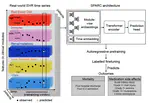
Towards a personalized pregnancy experience: Forecasting symptoms using graph neural networks and digital health technologies
A graph neural network that forecasts third-trimester pregnancy symptoms (edema and fatigue) from wearable physiological data and daily app surveys, with heart rate variability and low-intensity activity emerging as key predictors.
Rui Zhu
,
Jennifer Yu
,
Stephen H. Friend
,
Sarah M. Goodday
,
Bo Wang
,
Anna Goldenberg
PDF
Cite
Code
PMLR
Foundation Models for Longitudinal Clinical Time Series in Oncology
SPARC, a transformer-based foundation model pretrained on more than 100 million longitudinal laboratory and vital-sign measurements from 224,047 patients with cancer, used to predict treatment toxicities, adverse events and mortality.
PDF
Code
Evaluating stimulus-based heart rate variability assessment in chronic constipation using a machine learning approach
We designed a stimulus-based heart rate variability protocol (active standing, deep breathing and stomach distention) and used logistic regression to weigh what each test adds to assessing autonomic function in chronic constipation.
Ji-Hong Chen
,
Lijun Liu
,
Jennifer Yu
,
Jan D. Huizinga
Cite
MLHC 2024 Abstracts
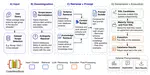
CodeWearBook: Agentic Natural-Language Querying of Wearable Health Datasets
Retrieval-grounded LLM agents that let researchers query large wearable health datasets in natural language, with privacy preserved by restricting the model to controlled SQL and Python execution layers instead of raw data access.
Manuscript (under review)
Dynamic Interpretable Change Point Detection for Physiological Data Analysis
Interpretable change point detection method
Jennifer Yu
,
Tina Behrouzi
,
Kopal Garg
,
Anna Goldenberg
,
Sana Tonekaboni
PDF
Cite
Code
Poster
PMLR
arXiv preprint
Learning Limited: How limited data sharing impacts machine learning performance in health
This study finds that machine learning models trained on pooled electronic health record (EHR) data from multiple sites can generalize better to unseen data, while also revealing that data sharing partnerships may not always enhance performance, and certain baseline models continue to be competitive except in few-shot learning scenarios.
Time for Baby: Leveraging Wearable Data to Enhance Personalized Pregnancy Outcomes - Delivery Readiness
This research project aims to use data from wearable devices to assess delivery readiness during pregnancy on an individual basis. The study collects physiological data from pregnant women to identify specific maternal indicators that could predict delivery readiness and potentially reduce the risk of adverse outcomes for both mothers and infants.
Cite
×